Business Name: BeeHive Homes of Collierville
Address: 1368 Wolf River Blvd, Collierville, TN 38017
Phone: (901) 286-3455
BeeHive Homes of Collierville
At BeeHive Homes of Collierville, Tennessee, we offer the finest assisted living and memory care experience available in a cozy, comfortable homelike 21 bedroom setting. Each of our residents has their own spacious room with an ADA approved bathroom and shower. We prepare and serve delicious home-cooked meals three times a day every day. We maintain a small, friendly elderly care community. We provide regular activities that our residents find fun and contribute to their health and well-being. Our staff is attentive and caring and provides assistance with daily activities to our senior living residents in a loving and respectful manner. We invite you to tour and experience our assisted living home and feel the difference.
1368 Wolf River Blvd, Collierville, TN 38017
Business Hours
Monday thru Sunday: Open 24 hours
Facebook: https://www.facebook.com/BeeHiveCollierville
Instagram: https://www.instagram.com/beehivecollierville/
Most families start checking out senior care after a scare: a fall in your home, a medication mix‑up, a wandering incident, or a steady decrease that unexpectedly ends up being difficult to overlook. In those minutes, the world of assisted living and elderly care can seem like an alphabet soup of choices and sales language. Buried in the information is one element that silently forms practically everything about a resident's life: the size of the care setting.
Having worked with older adults in both large communities and small residential homes, I have seen the difference that scale makes. Bigger is not immediately even worse, and smaller is not automatically much better. However when the priority is safety, close supervision, and genuinely personalized support, attentively run smaller settings have some structural advantages that are hard to replicate in a large structure with a hundred residents.
This does not mean everybody ought to rush towards the smallest home they can discover. It indicates families must comprehend how size impacts care, what trade‑offs are included, and how to tell a well run small environment from one that just calls itself "relaxing".
What "small" really suggests in elderly care
People use the term "small" to describe whatever from a 20‑apartment assisted living wing to a four‑bed residential care home. To comprehend the influence on security and supervision, it assists to draw some rough lines.
In numerous regions, senior care settings fall under three broad groups:
- Large neighborhoods: typically 60 to 200 residents, frequently with numerous floors, dining spaces, and activity spaces. Mid sized facilities: approximately 20 to 60 residents, often a single structure or wing, sometimes part of a bigger campus. Small residential settings: normally 3 to 16 homeowners, typically accredited as adult family homes, board‑and‑care, residential care homes, or comparable names depending upon the state or country.
The labels vary by jurisdiction, but the lived experience in a 10‑resident home is extremely various from that in a 120‑resident facility.
In a large assisted living community, the benefits normally fixate amenities: restaurant‑style dining, regular activities, on‑site therapy, transport, and a sense of a "town" under one roofing. The trade‑off is that staff must cover a lot of ground. A caretaker may be responsible for 12 to 18 citizens throughout a shift, in some cases more, often spread across a long passage or numerous wings.
In a really small elderly care home, there might be 1 or 2 caretakers for 6 to 10 homeowners, all within line of sight or simply a brief hallway away. There is usually one kitchen area, one main living area, and bedrooms nestled closely around them. What you quit in shiny features, you get in distance. That distance is what translates into security and supervision.
Why physical scale shapes safety
When we discuss "safety" in senior care, we are actually talking about specific dangers: falls, roaming and exit‑seeking, medication errors, choking and goal, delayed response in emergencies, and undetected modifications in health status. Size influences each of these, frequently in subtle ways.
In a smaller setting, staff can literally hear more. A chair scraping on tile, a closet door opening, a resident muttering in the corridor at 3 a.m. These small sounds typically precede an occurrence. In a big structure with long hallways, heavy fire doors, and mechanical sound, those early hints are simple to miss.
One afternoon in a 9‑bed home, a caregiver I dealt with paused mid‑conversation and stated, "That is not her typical cough." She strolled down the hall, examined a resident, and found that she had started aspirating on a sip of water. Quick intervention, urgent call to the physician, healthcare facility visit, and the resident recovered. Would that have been caught as rapidly in a dining-room with 70 individuals talking over clattering dishes? Perhaps, but less likely.
Smaller environments also minimize the distance in between risk and reaction. If a resident stands up unsteadily, a caregiver three steps away can provide an arm. In a huge center, a resident might stroll a surprising distance before anyone notifications, specifically if staffing ratios are stretched at specific times of day.
None of this implies large communities can not be safe. Numerous are, and they frequently have more electronic cameras, nurse coverage, and security innovation. But technology hardly ever compensates for the simple truth that in a smaller area, it is harder for an issue to remain concealed for long.
Staff presence and supervision
Supervision is not just about viewing people; it is about understanding them all right to discover modification. Smaller elderly care homes tend to develop that familiarity by design.
In a 6 to 12 resident home, every caregiver typically understands:
- Each resident's common strolling speed and posture. How they like their coffee or tea. Which jokes land and which do not. What "regular" confusion looks like for that individual and what feels off.
That built up understanding ends up being an informal early‑warning system. An experienced caretaker in a small setting will frequently say things like, "She is quieter at breakfast today; something is developing" or "He normally naps after lunch, however he has actually been pacing for an hour." That sort of pattern recognition is much more difficult when a single person is juggling 15 homeowners throughout 2 hallways.
Larger assisted living communities attempt to build supervision through systems: regular rounding, electronic care notes, event reports, arranged assessments. Those are necessary, however they can develop a rhythm where personnel respond to jobs rather than to people. In a small home, jobs are still there, however they are woven into normal family life. Staff see residents from numerous angles in a single day: at the kitchen table, in the hallway, in the garden, throughout a television program. Supervision is built into every interaction.
Families typically observe this difference throughout respite care. A loved one might stay for two weeks in a 100‑resident neighborhood, then 2 weeks in an 8‑resident home. In the larger neighborhood, the family might receive a package of notes, a care summary, and set up updates. In the smaller home, they frequently hear, "She has actually started humming again after lunch; she appears more relaxed" or "He is consuming better if we sit with him and serve smaller portions first." Both approaches have value, however for fragile adults with dementia, the granular observations typically prevent larger problems.
Medication management and clinical oversight
Medication errors are among the most typical safety dangers in any senior care environment. Missing a dosage of blood pressure medicine might not trigger an immediate crisis. Doubling insulin or mishandling blood slimmers can.
In bigger facilities, medication management often relies on medication carts, arranged "med passes," bar‑code scanning, and different medication technicians. That structure can be extremely safe when staffing is steady and workflow is well organized. The danger comes on hectic shifts: an emergency alarm, a fall, three citizens requesting for help at the same time, and a med tech fast moving through a long list.
In smaller settings, there is hardly ever a med cart rolling down halls. Medications are usually saved in a locked cabinet or space, and the very same caretakers who assist with bathing and meals likewise handle regular medications, within their training and the regulations of their region. The resident list is much shorter, the timing more versatile. Personnel may offer high blood pressure tablets over breakfast, eye drops in the restroom a couple of minutes later, and prescription antibiotics throughout afternoon tea.
The safety advantage here originates from two aspects. First, less citizens indicate fewer complex schedules to handle at the same time. Second, caregivers often notice patterns quickly: "She is stealing her tablets in the afternoon; we need to attempt giving that one crushed with applesauce" or "He looks off every time we increase that dose." That feedback loop between observation and medical adjustment tends to be tighter in a smaller environment, specifically when a nurse or physician is accessible and engaged with the home.
That said, small homes can fall short if they do not have strong medical oversight. Households should ask how the home collaborates with doctors, who evaluates medications frequently, and how staff are trained. A small house without good systems can be more hazardous than a big neighborhood with robust medical protocols.
Fall threat and the design of day-to-day life
Falls seldom occur out of nowhere. They creep up through subtle shifts: a somewhat longer range to the restroom, a new thick carpet in the corridor, a chair put a little too far from the table. In a large center, maintenance and style choices are made for dozens of individuals simultaneously. That can work, however it undoubtedly means compromise.
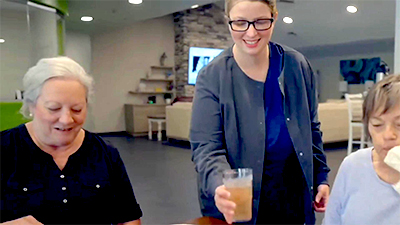
In a small elderly care home, the physical environment is more like a basic home: fewer stairs, much shorter ranges, and normally one primary area where people collect. Staff relocation through the exact same spaces constantly. If a carpet begins to curl at the corner, somebody normally journeys gently or notifications it within a day or 2, not weeks later during an official inspection.
The scale also enables practical customization. If a resident with Parkinson's freezes in narrow spaces, corridor furniture can be reorganized quickly. If someone with dementia puzzles the restroom door, personnel can include a colored indication or memory hint simply for that person. These small environmental tweaks directly lower fall risk and wandering without feeling institutional.
I keep in mind one resident, a previous carpenter, who kept trying to "repair" things in a large building. In the smaller home he relocated to later on, staff offered him a safe tool kit with blunt tools and small tasks: tightening up cabinet knobs, checking chair legs. His agitated walking became purposeful motion, and his fall events dropped over the next months. That sort of flexible action is a lot easier to attempt when you are dealing with a single living-room, not a five‑floor complex.
Emotional safety and the rhythm of the day
Physical security is just half the story. Psychological security matters simply as much, especially for older grownups living with memory loss, anxiety, or depression.
Large neighborhoods typically run on schedules adjusted for operational performance. Breakfast from 7 to 9, activities at 10, lunch at 12, showers on assigned days, medication passes at set times. Numerous residents appreciate the structure and variety, but specific individuals can feel swept along by a schedule that does not match their natural rhythm.

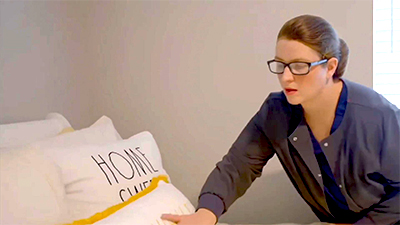
In a small residential senior care home, the speed is better to domestic life. If someone chooses coffee at 6 a.m. And breakfast at 9, it is simpler to accommodate. If another resident sleeps improperly and wishes to sit silently with a caretaker at 3 a.m. Seeing old films, there is room for that without disrupting dozens of others.
This versatility has a direct effect on agitation, particularly in homeowners with dementia. When individuals are not constantly being hurried, lined up, or asked to adjust to group schedules, they tend to be calmer and less resistant. Less agitation methods fewer events that escalate to physical restraint, sedating medications, or emergency transfers.
I have seen households shocked by how a parent's "habits problems" soften in a small assisted living or board‑and‑care home. A woman who struck staff in a big memory care system stopped doing so when she might consume in a small group at a home‑style table and invest afternoons folding towels in the kitchen area. The habits had been a communication of overwhelm, not an unchangeable personality trait.
The function of smaller settings in respite care
Respite care is typically the first real test of any elderly care arrangement. A brief stay provides everybody a chance to see how a setting deals with unknown routines, medical conditions, and psychological needs.
In a big assisted living or memory care community, respite stays can be highly structured: official admission evaluations, printed care plans, a set room for a minimal time, in some cases a minimum stay requirement. This works well for senior citizens who adapt rapidly to brand-new environments and delight in activity calendars filled with options.
Smaller homes tend to integrate respite residents straight into life. There may be an extra bedroom that ends up being "Grandpa's room," with the very same caretakers and routines as long-term locals. On the first day, personnel might take a seat with the family at the kitchen table, review medications and preferences, and view how the person relocations, consumes, and interacts.
For caretakers at home who are currently stretched thin, sending out a loved one to a small residential home for respite can feel closer to handing them to an extended household. That sense of continuity impacts how voluntarily older grownups accept the break. A male who declined respite in a large building with busy corridors often agrees to "remain for a couple of days because home with the garden and friendly pet."
Respite is likewise where supervision quality ends up being noticeable quickly. Families returning after a week can pick up on information: Is the laundry done and identified effectively? Does their loved one keep in mind staff names and feel at ease? Does the staff recount specific events and preferences, or just refer to generic "She did fine"?
Family involvement and transparency
One of the memory care home peaceful strengths of smaller elderly care homes is the transparency that features minimal space. Families see more of what happens, great and bad.
When you walk into a big senior care facility, you normally pass through a lobby, possibly a receptionist, then down hallways to a resident's room. You see a slice of life: a few personnel, some residents in common spaces, decoration, published menus and calendars. Much takes place behind doors and on other floors.
In a smaller home, you often step directly into the main living area. The kitchen area smells are right there. You can hear how personnel speak with citizens, notification whether call lights are going unanswered, and see who is in fact on shift. If something feels off, it is hard for the environment to hide it.
This presence can enhance cooperation. Families are most likely to have casual chats with caregivers, share observations, and adjust care together. That continuous conversation typically catches concerns early: skin changes, state of mind shifts, household dynamics, financial concerns. It likewise builds trust, which is crucial when difficult choices occur about hospitalizations, hospice, or transitions.
Trade offs and limits of smaller settings
Small does not suggest perfect. Every design of senior care has trade‑offs, and it is very important to look at them honestly.
One challenge is staffing depth. A large assisted living neighborhood with 80 homeowners may have a nurse on site every day, plus several caretakers, med techs, and backup personnel. If someone calls in ill, there is typically a pool to draw from. In a 6‑resident home, losing even one caregiver to disease can strain the group if there is not a solid backup plan.
Another issue is access to on‑site services. Larger buildings may provide on‑site physical therapy, checking out specialists, drug store shipment a number of times a day, and transportation vans. A small residential care home may rely more on outdoors service providers can be found in or families organizing visits. For extremely clinically complex locals, that extra coordination can be a burden.
Social variety is likewise various. Some outgoing seniors thrive in a big neighborhood with dozens of possible friends and several activities every day. They delight in the feeling of "heading out" to performances, lectures, and workout classes without leaving the building. In a small home, the social circle is intimate. For some, that seems like household. For others, it can feel limiting.
Regulation and oversight can vary as well. In lots of regions, small facilities are licensed under various classifications with different inspection frequencies. Some are exceptional and firmly run; others cut corners. Families can not presume that "home‑like" automatically means "high quality."
The key is to match the setting to the individual's needs and personality, and then examine the real operation of the home, not simply its size.
A short contrast: where small settings typically excel
Used thoroughly, a concise contrast can clarify where small elderly care homes tend to have an edge. For lots of homeowners with safety and supervision needs, smaller environments usually provide:
- Shorter reaction times when somebody requires aid or an alarm sounds. Closer observation and earlier detection of changes in health or behavior. More flexible daily regimens that lower agitation and resistance. Stronger staff‑resident relationships, resulting in tailored support. Easier household interaction and higher openness day to day.
These are tendencies, not guarantees. Some big neighborhoods strive to match or even exceed these qualities. Still, the structural benefits of proximity and familiarity are difficult to ignore.
How to assess a small elderly care home
For households thinking about a transfer to a smaller setting, the secret is not just "Is it small?" however "Is it well run, safe, and aligned with our requirements?" It assists to ground the search in a short psychological checklist during visits.
Here is one simple way to focus your attention while touring or setting up respite care:
- Watch how staff talk to homeowners: tone, persistence, eye contact, and whether they utilize names. Notice smells and sounds: strong odors, consistent alarms, or raised voices can signify problems. Ask specific concerns about staffing ratios on nights and weekends, not simply weekdays. Look for detailed understanding: can staff explain each resident's preferences and health issues? Clarify how emergencies, healthcare facility transfers, and interaction with families are handled.
You are not simply buying a room; you are signing up with a small ecosystem. The quality of that community will shape your loved one's security and sense of home more than any brochure.
Where smaller settings suit the larger senior care landscape
Elderly care is seldom a straight line. Lots of older adults move in between levels and kinds of care over time: independent living, assisted living, memory care, health center stays, skilled nursing, and hospice. Small residential homes and intimate assisted living settings fill an important specific niche in that landscape.
For those who are too frail or cognitively impaired to live alone, however who do not require the intensity of a nursing home, a small setting can supply the best level of structure and guidance without sacrificing self-respect and uniqueness. For family caregivers nearing burnout, a short respite in a small home can prevent crisis and extend the possibility of continued care at home.
The trend in lots of areas has actually been a gradual shift towards these "home within a home" models. Some big schools now develop their memory care or high‑acuity assisted living as clusters of small households under one larger umbrella. Each family might host 10 to 14 residents, with its own kitchen area and care team. That hybrid approach attempts to mix the intimacy of small homes with the resources of a big organization.
At its best, elderly care is not about buildings at all. It has to do with relationships, regimens, and actions to vulnerability. Smaller settings, when attentively staffed and well managed, frequently make those human components easier to deliver. They develop environments where personnel can really understand residents, where households can stay closely involved, and where safety is the outcome of consistent, peaceful attentiveness instead of periodic crisis response.
For families standing at the crossroads of senior care decisions, taking notice of size is not a small detail. It is a useful method to predict how well a setting will protect your loved one from avoidable harm, how closely they will be monitored, and how personally they will be supported in the daily company of living the later chapters of their life.
BeeHive Homes of Collierville provides assisted living care
BeeHive Homes of Collierville provides memory care services
BeeHive Homes of Collierville provides respite care services
BeeHive Homes of Collierville supports assistance with bathing and grooming
BeeHive Homes of Collierville offers private bedrooms with private bathrooms
BeeHive Homes of Collierville provides medication monitoring and documentation
BeeHive Homes of Collierville serves dietitian-approved meals
BeeHive Homes of Collierville provides housekeeping services
BeeHive Homes of Collierville provides laundry services
BeeHive Homes of Collierville offers community dining and social engagement activities
BeeHive Homes of Collierville features life enrichment activities
BeeHive Homes of Collierville supports personal care assistance during meals and daily routines
BeeHive Homes of Collierville promotes frequent physical and mental exercise opportunities
BeeHive Homes of Collierville provides a home-like residential environment
BeeHive Homes of Collierville creates customized care plans as residents’ needs change
BeeHive Homes of Collierville assesses individual resident care needs
BeeHive Homes of Collierville accepts private pay and long-term care insurance
BeeHive Homes of Collierville assists qualified veterans with Aid and Attendance benefits
BeeHive Homes of Collierville encourages meaningful resident-to-staff relationships
BeeHive Homes of Collierville delivers compassionate, attentive senior care focused on dignity and comfort
BeeHive Homes of Collierville has a phone number of (901) 286-3455
BeeHive Homes of Collierville has an address of 1368 Wolf River Blvd, Collierville, TN 38017
BeeHive Homes of Collierville has a website https://beehivehomes.com/locations/collierville/
BeeHive Homes of Collierville has Google Maps listing https://maps.app.goo.gl/F1PuQmWyGT6PTGmY6
BeeHive Homes of Collierville has Facebook page https://www.facebook.com/BeeHiveCollierville
BeeHive Homes of Collierville has Instagram page https://www.instagram.com/beehivecollierville/
BeeHive Homes of Collierville won Top Assisted Living Homes 2025
BeeHive Homes of Collierville earned Best Customer Service Award 2024
BeeHive Homes of Collierville placed 1st for New Mexico Senior Living Communities 2025
People Also Ask about BeeHive Homes of Collierville
What is BeeHive Homes of Collierville Living monthly room rate?
The rate depends on the level of care that is needed. We do an initial evaluation for each potential resident to determine the level of care needed. The monthly rate is based on this evaluation. There are no hidden costs or fees
Can residents stay in BeeHive Homes of Collierville until the end of their life?
Usually yes. There are exceptions, such as when there are safety issues with the resident, or they need 24 hour skilled nursing services
Do we have a nurse on staff?
Yes, we have a part-time nurse with an on-call nurse if needed for after hours. We also have a Med Tech on staff that can administer medications
What are BeeHive Homes of Collierville's visiting hours?
Visiting hours are adjusted to accommodate the families and the resident’s needs… just not too early or too late
Do we have couple’s rooms available?
Yes, each home has rooms designed to accommodate couples. Please ask about the availability of these rooms
Where is BeeHive Homes of Collierville located?
BeeHive Homes of Collierville is conveniently located at 1368 Wolf River Blvd, Collierville, TN 38017. You can easily find directions on Google Maps or call at (901) 286-3455 Monday through Sunday Open 24 hours
How can I contact BeeHive Homes of Collierville?
You can contact BeeHive Homes of Collierville by phone at: (901) 286-3455, visit their website at https://beehivehomes.com/locations/collierville/ or connect on social media via Facebook or Instagram
Carrabba's Italian Grill offers family-friendly dining that complements Assisted Living, Memory Care, Senior Care, Elderly Care, and Respite Care visits.